Monday 14 January 2013
This is the last time we shall post a non-bus, so we thought it was time to tell you our plans from now on. The 498 and 499 - coming soon - are the last routes in the main number sequence. A few of London buses are numbered in the 500s, and we shall, of course, travel and post the stories of these routes.
The 497 does exist, by the way: it would take you to Great Yarmouth for sea and sand, funfair and ice cream, if not actually sunshine at the moment. But it is a National Express coach, and therefore none of our business.
Now, where was I? Oh yes, the future: we shall not be travelling the Night Bus routes; they are too late for us and also the chances of getting vomited upon are too high. And as you all know, almost all 600s are school journeys only. Here is a list of them. There are a couple of 'ordinary' 600s which we shall come to in due course. We shall be travelling the few 500s and 600s which remain and then moving on to the letter buses.
The Rules Committee is still pondering how best to travel these London buses (there are over 100 of them). We are still uncertain, for example, whether we shall do all the 'B's before moving on, or whether we might want a change from Bexleyheath from time to time. We shall let you know when a conclusion has been reached and ratified.
Meanwhile, our technical support in Milton Keynes will be making us an index of the non-route posts, when he has a moment.
Monday, 14 January 2013
The Number 496 Route
Tuesday 5 July 2011
Tuesday is dustbin day round here, and we
were held up by the van for a while
We got to the hospital at 11.00: slightly
longer than the 29 minutes suggested as we set off, but none the less, quite
nippy.
Sunday, 13 January 2013
The Number 494 & 495 Routes (Not)
Again with thanks to E-Plates we have learnt that these were
outer London routes – the 494 running between Oxted and East Grinstead and the
495 closer to where we were last week on the 492, namely from Northfleet to the
Christianfields Estate, which would appear to be a mixed estate of council
owned and privately owned Wates-style houses in Gravesend.
---------------------------------------------------------------------------------------------------
For those of you who want them, here are the answers
to the quiz set in the posting for
The Number 475 Route (not):
1. Route 66;
2. The Master Builder;
3. Wagon Master;
4. Roots;
5. Master and Commander;
6. US Masters;
7. Root beer;
8. Masterblaster;
9. Masters of War;
10. Levi Roots;
11. The Master-Singers of Nuremberg;
12. Bat Masterson;
13. Amanda Root;
14. View-Master;
15. The Master and Margarita;
16. The root of all evil;
17. Nature's great masterpiece;
18. The Demon Headmaster;
19. Root canal work;
20. Masterchef.
The Number 475 Route (not):
1. Route 66;
2. The Master Builder;
3. Wagon Master;
4. Roots;
5. Master and Commander;
6. US Masters;
7. Root beer;
8. Masterblaster;
9. Masters of War;
10. Levi Roots;
11. The Master-Singers of Nuremberg;
12. Bat Masterson;
13. Amanda Root;
14. View-Master;
15. The Master and Margarita;
16. The root of all evil;
17. Nature's great masterpiece;
18. The Demon Headmaster;
19. Root canal work;
20. Masterchef.
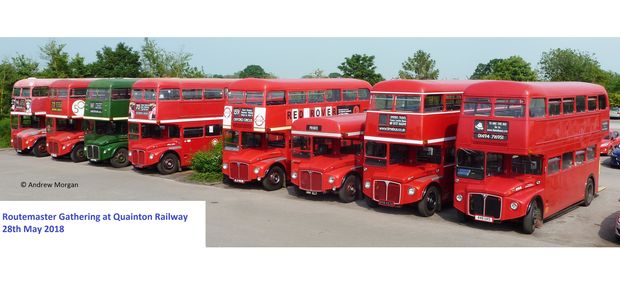
And here, for the fans of the bus that inspired the quiz, is
a link to the website of the Routemaster Association, from
which we have borrowed the picture
Saturday, 12 January 2013
The Number 493 Route
North Sheen (Manor Circus)
to Tooting Broadway
Wednesday June 12th 2012
Our last bus had left us further back along the Lower
Mortlake road so we walked the short way between two roundabouts – a busy
stretch with workers’ cottages on one side and bland office blocks on the other
– however, both pavements were wide enough to accommodate cycle tracks so
bikers did not have to contend with the very heavy traffic. Again it was a
single decker and as we waited we noted the overflowing bin lid of dog ends – a
very depressing sight.
It’s only a short ride back into Richmond past Young’s pub
and Orange Tree theatre but pausing long enough to admire Richmond’s central
reservation’s hanging baskets. The bus did not bother with the rather
inadequate Richmond Bus station but headed off towards Sheen passing the
splendid Christian Science Reading Room – bigger than some local libraries.
This particular faith brand used to have higher profile but they seem to have
been overtaken in the quirky faith stakes.
The bus passes two sets of Almshouses in quick succession,
starting with the Houblon Almshouses built by the Huguenot sisters Rebecca and
Susanna whose father was Lord Mayor and something big at the Bank of England;
their largesse extended to brown gowns once a year for the female residents.
Next come Hickey’s Almshouses – the origins of Mr Hickey’s wealth are not
specified but his trustees built homes for both men and women. The exteriors
are largely unchanged.
Sheen is clearly ripe for interesting building as not much
further along we were astounded to see the extent of the Courtlands development. The site has a long history but the substantial blocks date
very evidently from the Thirties – we guessed there might be a shortage of
parking (though the station is close) but the original architects had factored
in garages also. To all intents and purposes this is actually the South
Circular road and the bus follows it, passing Rosslyn Park Rugby Ground, the
Sheen Garden Centre and the strangely named
‘Lofty Turtle’ bar, until it takes a circuitous right turn along Roehampton
Lane. The turning is still called the Red Rover in memory of the pub that stood
here. In the Sixties I worked with a special school in Putney and the Head
would often pop down here for a quick lunch-time ½ pint – how times have
changed. Roehampton Lane is now quite
impressive as the University of Roehampton has unified the various colleges
along here which all offered well-established teacher training courses. Maybe
it was exam time or term has finished but it seemed pretty quiet.
The end of the lane delivers traffic into Roehampton, a
former village with extensive public housing grafted on since the Sixties. I
cannot pretend the two have ever quite gelled but certainly the Roehampton
Estate gets a wider range of bus services than it used to. However that was not
our destination today, so we paid our respects to the Roehampton Drinking
Fountains (people and horses) guarded by some distinctive putti. (P) Talking of
guardians, we saw several policemen today – 2 on horseback enjoying the sun and
the heath and two seemingly standing guard over the Waitrose on Upper Richmond
Road…
The Queen’s Own Surrey Regiment has a rather hidden war
memorial, though that may be due to exuberant tree growth, as we sped along the
side of Putney Heath past the Tibbets Corner roundabout and as if along to Wimbledon
Park Side as the grown up Route 93 does.
However, if you have been paying attention you know the higher route
numbers take the less obvious roads and so it was that we found ourselves
heading to Wimbledon via Augustus Road and Southfields. There is quite dense
housing here (though fortunately nothing too high-rise) and therefore an
appropriate complement of schools. Jo
was taken with Our Lady of Lourdes have recently returned from the original
site of the visions; next door was St.John Bosco
College also RC but of whom we had no knowledge. He seems to have believed that
teaching methods based on love achieve more than those based on punishment so
that sounds like a good enough role model.
By the time we arrived in Southfields, which links this bit
of London in via the District Line, we had swapped the 93 route for the 39.
Southfields is of course the station you should choose if you want to visit the
tennis, rather than the much more remote and over the hill Wimbledon. When the
tournament is on they tend to run shuttles from Southfields to the All England
Lawn Tennis Club which sits behind a long wall (I expect that’s why they only
have single deckers) punctuated with thematic metal grilles. It will probably
be mid-winter by the time you read this but as we came along the 2012
tournament was only 10 days away and they were still working frantically on the
road surfaces, which led to a certain amount of hold up. The tennis bits of the
Olympics will also be taking place here of course. Other hold ups included two
cash paying /no change passengers. Opposite the AELTC is the very lovely Wimbledon Park, through which the Capital Ring walk takes you – a park complete
with lake, and Capability Brown had a hand in designing it . .
The lake I believe is a bit of diverted River Wandle and we
were to meet it further down the line. Church Road brought us out in the middle
of the very charming (and expensive – this where the players shop ‘locally’)
Wimbledon village, before plunging down Wimbledon Hill – this is not a route
that lingers in the modern town centre but we noted that Ely’s Department Store
did not seem to belong to the usual John Lewis/Debenhams groups and
subsequently found it is actually one of the group of 8 remaining independent
department stores dotted around London, including Pearsons in Enfield and
others.
This route follows others along the substantial railway
lines where Waitrose have recently opened a branch, which must boost passenger
numbers somewhat. More enigmatic is the unnamed cemetery along Gap Road To quote Darren Beach: ‘ A
measure of how little consideration is usually given to this cemetery is that
even Merton Council seems reluctant to give much information…’ We have been past several times and it does
not even seem to have a visible name board.
The surroundings change radically at this point. Though the Wandle (which we crossed near
Plough Road) is no longer the industrial river it once was the area is full of
business parks, workshops, large warehouses,outlets etc which doubtless serve
both Wimbledon and Tooting just over the horizon. We stopped in one such
location for the drivers to change – this seemed a deeply puzzling place to
swap over with the mini-hub of St George’s just round the corner.
The 493 finishes by paralleling the walls of Lambeth’s
Cemetery and Crematorium in Blackshaw Road.
It boasts few ‘names’ except for Charlie Chaplin’s father in an unmarked
grave, which tells you something about that family’s early poverty. At the end
of Blackshaw Road is St George’s Hospital now well settled in this part of
London after its post war re-location. St George’s is well supplied with buses
and is also close to the Northern Line on Tooting Broadway. We stayed on
because that is what we do (end to end of every route) but it would have been
much quicker to walk than wait ages to come out of the side road and edge along
the quite narrow High Street. As we got out we realised the 493 does another
loop to finish back at the hospital – something of a glutton for punishment as
we had already been underway for 90 minutes!
Lunch and other chores took precedence on reaching the last
stop so there.
If you're exhausted reading this think how we were after this epic south-west London trip.
Friday, 11 January 2013
The Number 492 Route
Thursday 10 January 2013

Linda and I were delighted to have Mary back with us after all the Christmas festivities, and we met at Sidcup Station, to take the 492 to Bluewater. As an uneven number of London Buses serves the great shopping experience in the chalk quarry, we had known for many months that we should have to come back one more time. Two charming railway people at Sidcup Station, who told us where the bus stop was, offered us faster ways to get to Bluewater, but we gave them a card to explain why we were taking the almost-an-hour bus.

We climbed aboard at 10.40, and were the only people on the double decker for some time. Heading out past Marlowe House, which held bleak memories for my travelling companions from their working years, we turned left along Sidcup Parade, passing an Iceland which had clearly once been something grander, as well as the Tailor's Chalk Pub. The name comes from the fact that the premises once housed a bespoke tailor, as well as a dry cleaner. Let me say, not for the first time, how much we appreciate Wetherspoons' willingness to explain their pubs' names. We wondered whether the new Travel Lodge is on the site that might have been a Waitrose, and sure enough, the Bexley Times seems to suggest that John Lewis has been behaving less than well.
Coming past Rectory Lane, we noted some new homes for sale, including some with three bedrooms, and some for shared ownership. They are available for £300,000... Then, as we headed down the hill, we passed an enormous Chartered Accountants' office, with a clock. Then we admired a house which seemed to date from an earlier age, as well as catching a glimpse of the River Cray. By now we were into Footscray, and Footscray Meadows were looking green and pleasant: but the steamed up bus windows of this cold and slightly foggy day made photography unrewarding.
This is a mainly residential area: there were bungalows to our right, and substantial semis along a service road to our left. Then for a while, we felt as if we were almost into the country (horses in a field!) before coming to Bexley Village, the village sign sponsored by a supplier of Bifold Doors. Through the village, the road felt more like a lane, narrow and winding. The inn sign of the Coach and Horses pub had faded to white, but the pub itself appeared to be flourishing: in fact we remarked that we saw a number of healthy pubs and no closed ones on this trip.
A large house on the High Street has a blue plaque for John Thorpe but it's not an English Heritage plaque. Here is a closeup. I think he was the person who persuaded everyone who mattered in the 18th century that Stonehenge was interesting, and thus helped ensure the stones were not used for other purposes.

Bexley Village Library is a charming little building: there is a notice outside that says how many books it had -7670- and we hoped it would survive. The village also has a pub called The George. Judging by the Inn sign, we thought it was probably George II but, you've guessed, I can't find a website that specifies. We spotted some signs for an over 30s night club but, regrettably, did not have time to note details or even a website. And of course, we don't know if it means WELL-over 30s, so it was probably not for us.
A bridge over the A2 brought us rapidly into Bexleyheath, where we admired what had clearly once been a fine cinema and was now Gala bingo. We have been here often before, and so were not taken aback by the little twiddle that takes buses into the small town centre station. A group of police officers at the bus stop, studying a leaflet and talking on their phones made us assume they were looking for a missing person, though whether criminal or not we could not guess. Of course Bexleyheath has an ENORMOUS police station, unlikely to be closed whatever happens to others.
Heading along Mayplace West and then Mayplace East, we were back into residential housing, some modern terraces with 'Georgian' bow windows, but also sizeable semis with hardened front gardens. Allotments and a sports club brought a bit of green, as did the pretty graveyard of St Paulinus' Church. St Paulinus is the one who came in the second wave, after St Augustine (we are talking the 7th century here) and went north when a Kentish Princess was sent to marry King Edwin of Northumbria, then a pagan. So he is really the apostle of the north, but commemorated here in Kent, where his career began.
Crayford has a number of pubs. The Duke's Head looked as if it might be Wellington, since he was in a military scarlet coat. The Bear and Ragged Staff is of course the emblem of Warwickshire, and we have, on recent trips, passed pubs named for the earl of Warwick, so maybe the Earls had interests in brewing.
As we crossed the River Cray, we saw a notice which piqued our interest. The Wigglers appear to be linked to greyhound racing in Crayford. We, of course, know more about the Walthamstow track, which has been very much in the news.
Station Road took us uphill past Crayford Station and back into a residential area, where the only parade of shops we passed consisted of fast food outlets and hair dressers. And yet we were the only bus along here. As we turned into Shepherds lane, I was quite excited to see a segregated cycle track on the right hand side of this busy road but, alas, it did not last, petering out just by the first of Dartford's two Grammar Schools. It is of course the Boys' version that has the more famous alumnus.
We continued fairly steeply down West Hill, where we guessed that the large and distinguished building to our left must have been a workhouse or some such. And indeed it had been. The centre of Dartford seems to us dominated by the footbridge that takes people across to the station, but that view may have been coloured by the fact that we knew we should soon be needing to head home from Bluewater, from that very station. At the moment, after a pause beneath the bridge, we ploughed on, past the BIZNIZ centre and over the Darent.
We were interested in the offset position of the clock on the tower of Holy Trinity Church, deducing that the medieval tower and window predated the clock by some centuries.
But we were nearly at our destination: we passed several more pubs (the Welsh Tavern had the Prince of Wales' feathers for its sign; another Woodman, to go with the Woolwich Woodman from last week; the Welcome All pub near the much larger Bull) We aso liked the rural setting of the War Memorial at Stone.
Then we were alongside the A2, and then onto it, following the right hand bus lane that turns into Bluewater. There seemed to be excavations going on in a field alongside, but I can't discover what they were digging for (or burying?)
We got to the not-very-beautiful bus station of Bluewater at 11.50, only a very few minutes later than the advertised time. if only the weather had been less misty, we should have enjoyed striking views as we travelled up and down the hills of this part of north Kent.

Linda and I were delighted to have Mary back with us after all the Christmas festivities, and we met at Sidcup Station, to take the 492 to Bluewater. As an uneven number of London Buses serves the great shopping experience in the chalk quarry, we had known for many months that we should have to come back one more time. Two charming railway people at Sidcup Station, who told us where the bus stop was, offered us faster ways to get to Bluewater, but we gave them a card to explain why we were taking the almost-an-hour bus.
This is a mainly residential area: there were bungalows to our right, and substantial semis along a service road to our left. Then for a while, we felt as if we were almost into the country (horses in a field!) before coming to Bexley Village, the village sign sponsored by a supplier of Bifold Doors. Through the village, the road felt more like a lane, narrow and winding. The inn sign of the Coach and Horses pub had faded to white, but the pub itself appeared to be flourishing: in fact we remarked that we saw a number of healthy pubs and no closed ones on this trip. 
Bexley Village Library is a charming little building: there is a notice outside that says how many books it had -7670- and we hoped it would survive. The village also has a pub called The George. Judging by the Inn sign, we thought it was probably George II but, you've guessed, I can't find a website that specifies. We spotted some signs for an over 30s night club but, regrettably, did not have time to note details or even a website. And of course, we don't know if it means WELL-over 30s, so it was probably not for us.
A bridge over the A2 brought us rapidly into Bexleyheath, where we admired what had clearly once been a fine cinema and was now Gala bingo. We have been here often before, and so were not taken aback by the little twiddle that takes buses into the small town centre station. A group of police officers at the bus stop, studying a leaflet and talking on their phones made us assume they were looking for a missing person, though whether criminal or not we could not guess. Of course Bexleyheath has an ENORMOUS police station, unlikely to be closed whatever happens to others.
Crayford has a number of pubs. The Duke's Head looked as if it might be Wellington, since he was in a military scarlet coat. The Bear and Ragged Staff is of course the emblem of Warwickshire, and we have, on recent trips, passed pubs named for the earl of Warwick, so maybe the Earls had interests in brewing.
We were interested in the offset position of the clock on the tower of Holy Trinity Church, deducing that the medieval tower and window predated the clock by some centuries.But we were nearly at our destination: we passed several more pubs (the Welsh Tavern had the Prince of Wales' feathers for its sign; another Woodman, to go with the Woolwich Woodman from last week; the Welcome All pub near the much larger Bull) We aso liked the rural setting of the War Memorial at Stone.
Then we were alongside the A2, and then onto it, following the right hand bus lane that turns into Bluewater. There seemed to be excavations going on in a field alongside, but I can't discover what they were digging for (or burying?)
We got to the not-very-beautiful bus station of Bluewater at 11.50, only a very few minutes later than the advertised time. if only the weather had been less misty, we should have enjoyed striking views as we travelled up and down the hills of this part of north Kent.
Wednesday, 9 January 2013
The Number 491 Route
Wednesday 11 April 2012
As we came to Brimsdown Station, I noted
that traffic waiting to turn left was being held up by the level crossing, and
then we turned through the business area to pass close to Ponders End Station and
reach the High Street, where many passengers got off. The traffic here was very slow, again, so I had time to
notice the mostly hardened front gardens of the terrace houses. I noted, for our collection, a
hairdressers called Heir Kutz, as well as the Goat Pub which seems to be a music venue.
The other pub we passed was the Wetherspoons Picture Palace. Unusually, the Wetherspoons website
does not explain the name.
At this point a 491 going in the other
direction met us, and I noted it was going to terminated at Brimsdown; evidence, I suppose, of the slow
traffic I had experienced or witnessed all morning.
We passed both the Salvatioin Army and the
Mevlana Rumi Mosque. This is the
branch of Islam famed for its ‘whirling Dervishes’ but the mosque was merely a
quiet house.
After that we came, comparatively swiftly,
to Silver Street Station, and popped onto the North Circular for a few metres to reach the North Middlesex
Hospital. It was 13.25, not exactly
the journey length suggested, but we had often said that we think the bus stop
times suppose a non-existent time of day with no traffic.
This route had linked up various places the
project had visited before, and the rain had held off for the whole route.
The Number 490 Route
Heathrow Terminal 5 to Richmond (Pools on the Park)
Wednesday June 12th 2012
Jo and I were on our own while Mary did some recuperation,
and however tedious the day might have been (and it wasn’t) we were enjoying
the first reasonable if slightly tentative sunshine of June – not that either
sun or indeed light was very visible initially as this trip starts from the
Terminal 5 Bus Station (beautifully clear in its lay-out but definitely under a
runway or two and therefore in perpetual gloom). Unlike Jo I have a soft spot
for airports and was one of those strange people who volunteered to try out T5 on
a January Saturday about three months before its infamous opening.
This was a clean and newish single decker bus and even took
on some passengers with long-haul luggage switching terminals. From this you
will gather the route starts its life by scurrying along the Southern Perimeter
Road, a dual carriageway which follows the River Crane, and takes in the
Heathrow cargo centre (Royal Mail hangs out here), Gate Gourmet catering, the
long stay car parks and then Terminal 4 where a few suitcases and their owners
transferred. The bus shelter sported a poster supporting the 4th
runway (which I think is unlikely) and a large advert for Etihad who are
following in the footsteps of Emirates by sponsoring a football stadium.
Soon we were swinging into Hatton Cross where most of the
workers for Heathrow emerge – it is truly an airport which never sleeps.
We then passed Hatton cemetery, in Faggs
Road, Feltham whose website subsequently told us that it is the
newest of Hounslow’s cemeteries, opening in 1974, built as indeed all
cemeteries need to be, with forward planning in mind. Thus there is a large section designated for the borough’s
growing Muslim population for whom burial is the only option, with graves
orientated towards Mecca. There are of course also sections for other
denominations. This is very much a newcomer amongst some of the burial grounds
we have passed. The route 490 detours to serve what feels like the back, but when it was built was undoubtedly the front, of Feltham station where there are some older homes. On the whole the bus avoids the newer High Street (plenty of other routes don’t) but takes a turn round what must have been the original Feltham village – so narrower roads and older quainter houses. As the original school dated from 1904 we guess most of the homes do also - however they have chosen a more modern font, Comic Sans for their school board and their website – sigh.
We crossed another trickle which I suppose was the Crane though there is also a river Longford hereabouts. Passing ‘The Airman’ pub reminded we had still not come far from Heathrow though believe or not we only spotted one plane today – not sure where they all were.
We took the Staines Road option to Twickenham, which means passing the substantial golf course and swathes of fairly samey residential homes, mainly of the Thirties semidetached variety often with front gardens given over to car parking. At one point there was a smell of burning rubber (were we alight?). I was rather puzzled by the large letters EABF on some metal gates but find they (the gates) belong to Entertainments Artistes Benevolent Fund, which has its HQ here and I rather think is a rest home for retired entertainers.

Fullers Brewery, who cherish their pubs, own the very charming ‘Prince Blucher’ along near Twickenham’s traditional village green though why the German hero of Waterloo is commemorated here I am not sure – at that point the Germans were on our side so perhaps we felt ‘credit was due’.
Obviously sunshine helps, so Twickenham Green was looking very attractive and clearly expecting to host some cricket with covers (? what do I know) visible. Twickenham is nearly synonymous with Rugby but today we were not passing those grounds, but there were others to come. Contrary to appearances the Green was once part of Hounslow Heath (famed for its footpads and highwaymen) so has been upscaled into a faux traditional village green, complete with village pump.
We hit our first significant traffic of the day along the High Street so had time to study the shops. Talking of upscaling, we passed 'Chez Chevallier' which sells that combination of chocolates, champagne and flowers which Jo suggested usually indicate presents for mistresses or presents for wives from guilty partners… A debate over the spelling kept us going until we left Twickenham behind and were passing both Orleans House gallery and more importantly the lovely little Marble Hill House (now the mistress here – Henrietta Howard, consort to George II as Prince of Wales – would have been in receipt of the 18th equivalent of champagne chocolates and flowers.. and whole little villa perhaps?) The website has much better pictures than anything we managed from a speeding single decker bus.
From here traffic slowed us down on our approach to Richmond Bridge – this is very rich territory for Charity Shops, which line the pleasant approach to the bridge, and we did capture the Thames looking brown and murky after days of rain but no flooding as far as we could see. More slow traffic round Richmond station, then on beyond there for the home of London Scottish Rugby (they seem to come thick and fast in SW London) before we pulled into Pools on the Park where the 490 terminates. The pools are indoor and past the first flush of youth so we did not linger and pushed on down the Lower Mortlake Road to our next route, the 493.
Subscribe to:
Posts (Atom)